Madhya Pradesh Urged to Enforce Child Marriage Ban Over Personal Laws, Says Activist Bhuwan Ribhu


Bhopal, India – In a push for stronger child protections, activist Bhuwan Ribhu has called on the Madhya Pradesh government to prioritize the national ban on child marriage over religious personal laws, arguing that the state’s track record positions it to lead India’s fight against crimes targeting children.
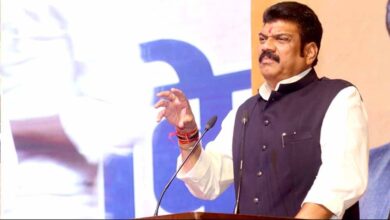
Speaking at a press conference in Bhopal on Monday, Ribhu, founder of the nonprofit Just Rights for Children, emphasized that the Prohibition of Child Marriage Act (PCMA) of 2006 must supersede all customs and codes to safeguard minors uniformly, regardless of faith. “The Prohibition of Child Marriage Act is above every personal law, every custom, every code,” he said. “Madhya Pradesh must enforce this principle and prove that the law protects every child, without compromise.”
The appeal comes amid recent high court rulings that have permitted personal laws to override the PCMA in some cases, potentially undermining efforts to curb child marriages. Ribhu, the first Indian lawyer to receive the “Medal of Honour” from the World Jurist Association and chairman of Jurists for Children Worldwide, urged the state to build on its progressive stance. Madhya Pradesh was the first in India to introduce the death penalty for the rape of girls under 12, a measure Ribhu said should inspire similar resolve against child marriage.
With children comprising about 40% of Madhya Pradesh’s 73 million population, the state has made notable strides in combating child exploitation through partnerships between government agencies and civil society. Just Rights for Children, which coordinates a network of 250 nongovernmental organizations, reported assisting law enforcement in preventing or halting 36,838 child marriages, rescuing 4,777 trafficked children, and supporting over 1,200 survivors of sexual abuse across 41 districts from April 2023 to August 2025.

In high-prevalence areas like Rajgarh (46%), Sheopur (39.5%), and Chhatarpur (39.2%), these interventions have shielded thousands from harm, according to Ribhu. The collaborative approach involves police, lawyers, child welfare committees, and local communities, bolstering enforcement and awareness. Overall, the state’s child marriage rate stands at 23.1%, slightly below the national average of 23.3%, but spikes in districts such as Jhabua (36.5%) and Agar Malwa (35.6%) highlight ongoing challenges. Without robust action, Ribhu warned, child marriage perpetuates cycles of poverty, abuse, and school dropouts, particularly for girls.
Nationally, Ribhu highlighted broader progress under Just Rights for Children’s initiatives from April 2023 to July 2025, including preventing over 374,000 child marriages, rescuing more than 100,000 trafficked children, aiding 34,000 sexual abuse survivors with mental health care, and pursuing over 63,000 prosecutions. The group has also addressed digital threats, registering more than 1,000 cases of online child sexual exploitation. “When the law is enforced with urgency and purpose, children are truly protected,” Ribhu said, citing these figures as evidence that a zero-tolerance approach can transform India into a nation where no crime against children goes unpunished.
In Madhya Pradesh alone, Just Rights for Children has partnered with 17 NGOs in 41 districts over the past two years, blending large-scale awareness campaigns with legal tools to tackle child marriage, trafficking, sexual abuse, and labor. The organization supports the “Child Marriage Free India” campaign, aiming to eradicate the practice by 2030.
Under the PCMA, child marriage is defined as involving girls under 18 or boys under 21, with penalties extending to anyone who facilitates or participates in such unions, including priests, caterers, and guests. Ribhu, author of the bestseller “Children Have Children: Tipping Point to End Child Marriage,” stressed that true prevention requires the law to act as a deterrent, not a negotiable guideline.
As debates over legal uniformity intensify, Ribhu’s call positions Madhya Pradesh as a potential model for reconciling child rights with cultural traditions, potentially influencing national policy.